“small-grain coffee cultivation” search results (200)

An introduction to the characteristics of Yunnan small-grain Coffee Tippica Coffee Flavor and Taste Manor
Coffee is a kind of beverage crop with high economic value, which is called the three largest beverages in the world together with cocoa and tea, and its output and consumption ranks first among the three beverages. Coffee is rich in protein, fat, sucrose, starch, glucose, caffeine and other substances, rich aroma and delicious taste. Coffee is a perennial evergreen shrub or small tree of the genus Coffea of Rubiaceae.
2016-09-12 Taste delicious Yunnan small grains coffee pickup flavor taste manor producing area
Tippi Katim Coffee Flavor description characteristics of Grinding degree introduction of high-quality coffee beans in producing areas
Baoshan Lujiangba belongs to the south subtropical, northern tropical and semi-dry tropical climate, which is very suitable for the growth of small-grain coffee. The small-grain coffee grown here has the characteristics of excellent quality, fast growth, early fruit and high yield. most of the nutrients are close to or higher than those of foreign products, and the contents of crude fiber and sugar are higher than those of foreign products. As early as 1958, the international coffee tasting was held in London, England.
2016-10-13 Tin Kaka Tim Coffee Flavor description Grinding characteristics varieties producing areas
Qianjie Yunnan Coffee planting Story Yunnan small Coffee Bean Variety Katim Coffee Bean flavor
The skin of ripe fruit is red. Because its shape and color are similar to cherries, ripe coffee fruit is called coffecherry in many places. Under the bright red pericarp, the peel, pulp and a sweet sticky yellow substance wrap the coffee beans. Normally, there are two grains of coffee per fruit.
2023-05-23 One tree coffee several times a year planting
Yunnan small-grain coffee beans with moderate sour taste introduce the growth environment, altitude and other fine coffee beans
Small-grain coffee is suitable for growing in the mountains at an altitude of 800 to 1800 meters. If the altitude is too high, it will taste sour, and if it is too low, it will taste bitter. Small grains of coffee are mostly planted in dry and hot valleys about 1100 meters above sea level, so they are moderately sour, rich and mellow. There is a unique environment suitable for the growth of small seed coffee in many areas of Yunnan, and the quality of small seed coffee is excellent. The planting area is mainly distributed in the
2016-07-06 Sour medium Yunnan small grains coffee beans introduction growth environment altitude boutique
Description of Flavor of Yunnan small-grained Coffee Huaguoshan Flavor introduction to the characteristics of varieties producing grindness
The small seed species are also called Arabian species, the medium seed species are also called Ganfla species, and the large seed species are also called Liberian species. There are two common species: Arabica and Robusta. Coffee is rich in protein, fat, sucrose, starch, caffeine and other substances. after being made into a beverage, coffee is rich in aroma, delicious taste and rich nutrition, so it has become the world's three major beverages composed of tea and cocoa.
2016-10-10 Yunnan small grains Coffee Huaguoshan Flavor description Grinding Taste Variety producing area
Introduction of Arabica Coffee Origin introduction of Arabica Coffee Manor
Arabica coffee accounts for 70% of all coffee production, and Arabica coffee accounts for 70% of all coffee products. its excellent flavor and aroma make it a direct drinkable coffee with only 8 Arabica beans (8). But its resistance to dryness, frost, diseases and insect pests is too low, especially the natural enemy of coffee-leaf rust, so all producing countries are in
2016-07-12 Rabbi Coffee Origin introduction Allah Biya Manor producing area Native all
Introduction to the planting situation of Arabica Coffee Manor
Arabica coffee trees grow between 900m and 2000 m above sea level; they are hardy, and the suitable growth temperature is 1524 ℃; they need more humidity, and the annual rainfall is not less than 1500 ml. At the same time, they also require higher cultivation techniques and conditions. Arabica coffee beans are mainly grown in South America (except Argentina and parts of Brazil), Central American countries and Africa.
2016-07-12 Rabbi card seed coffee origin introduction manor planting situation rabbi card species
Cultivation techniques of small-grain Coffee in Yunnan Province: disease Control
1. Coffee rust is the main disease of coffee, the most harmful, the damaged plants, light reduced yield, serious death. Coffee rust is mainly harmful to leaves and sometimes to young fruits and twigs. After the leaves were infected, many light yellow spots appeared at first and enlarged in the form of water stains, followed by orange-yellow powdery spores on the back of the leaves, and there was a light green halo around the disease spots, which gradually expanded or connected in the later stage.
2015-10-07 Yunnan Province small grains coffee cultivation techniques diseases control
Yunnan Tieka Coffee Flavor description small Grain Taste characteristics process introduction of Fine Coffee
According to reports, in 1892, French missionary Father Tian used coffee fruit to breed the first coffee tree outside the church, and then cultivated more coffee trees and planted them around the church. Since then, the village of Zhukula began to grow coffee, and the village has been surrounded by coffee trees ever since. The two oldest elders in the village, Qi Guanghui and Li Fu
2016-10-09 Yunnan pickup coffee flavor description small grains taste characteristics process boutique
Introduction to the Flavor of Arabica Coffee Manor
Tibica coffee, which is native to Ethiopia and southeastern Sudan, is the most widely cultivated variety of coffee in the Western Hemisphere and has a higher yield in Hawaii. Hawaii Kona is on a par with Blue Mountain coffee, with a price difference of only $1 to $3. The bourbon subspecies was emigrated by French immigrants from the island of Island of Bourbon in the 18th century, today's French island of Reunion Island of R
2016-07-12 Rabbi Coffee Manor producing area Flavor introduction Allah Biya Coffee beans Tippi
Cultivation techniques of small-grain Coffee in Yunnan Province: disease Control
1. Coffee rust is the main disease of coffee, the most harmful, the damaged plants, light reduced yield, serious death. Coffee rust is mainly harmful to leaves and sometimes to young fruits and twigs. After the leaves were infected, many light yellow spots appeared at first and enlarged in the form of water stains, followed by orange-yellow powdery spores on the back of the leaves, and there was a light green halo around the disease spots, which gradually expanded or connected in the later stage.
2014-07-09 Yunnan small grain coffee beans Yunnan small grain coffee cultivation techniques Yunnan small grain coffee beans price
Yunnan small grain coffee
Origin: in 1892, French missionary Father Tian succeeded in growing coffee in a place called Zhukula in Yunnan. Up to now, there are still 24 coffee trees which are more than 90 years old in Zhukula Township. Zhu Kula is a mysterious, legendary and beautiful natural village, which belongs to the Zhukula Village Committee of Pingchuan Town, Binchuan County, Dali Prefecture. It is located on the banks of Yupao River, a tributary of the Jinsha River. It is a Dali Prefecture and Chuxiong.
2014-07-02 Yunnan small grains of coffee Yunnan coffee beans boutique coffee beans
Coffee beans Yunnan Arabica coffee
Origin: In 1892, French missionary Father Tian tried to plant coffee successfully in a place called Zhu Kula in Yunnan Province. Up to now, there are still 24 coffee trees growing in Zhukula Township, which are more than 90 years old. Zhukula is a mysterious, legendary and beautiful natural village. It belongs to Zhukula Village Committee of Pingchuan Town, Binchuan County, Dali Prefecture. It is located on the bank of Yupao River, a tributary of Jinsha River. This is a Dali Prefecture and Chuxiong County.
2014-09-19 Coffee beans Yunnan Arabica coffee
Arabica Coffee Flavor description introduction to the characteristics of High-quality Coffee Bean varieties
Arabica coffee accounts for 70% of all coffee production, and its excellent flavor and aroma make it the only coffee that Arabica beans can drink directly. However, its resistance to dryness, frost, diseases and insect pests is too low, especially the natural enemy of coffee-leaf rust, so all producing countries are committed to varieties.
2016-10-13 Rabbi coffee flavor description taste boutique coffee beans varieties producing areas characteristics
A brief introduction to the planting situation of Arabica Coffee Variety and Market Price
Arabica coffee accounts for 70% of all coffee production, and Arabica coffee accounts for 70% of all coffee products. its excellent flavor and aroma make it a direct drinkable coffee with only 8 Arabica beans (8). But its resistance to dryness, frost, diseases and insect pests is too low, especially the natural enemy of coffee-leaf rust, so all producing countries are in
2016-07-18 Rabbi Coffee Manor Flavor palate characteristics introduction Coffee beans Native all
Introduction to the characteristics of Arabica Coffee Flavor description, Grinding degree treatment, Price and planting Environment
Arabica coffee accounts for 70% of all coffee production, and its excellent flavor and aroma make it a direct drinkable coffee with only eight Arabica beans (8). However, its resistance to dryness, frost, diseases and insect pests is too low, especially the natural enemy of coffee-leaf rust, so all producing countries are committed to products.
2016-10-15 Rabbi coffee flavor description grinding processing characteristics price planting environment
The Origin of Yunnan small Coffee
Origin: in 1892, French missionary Father Tian succeeded in growing coffee in a place called Zhukula in Yunnan. Up to now, there are still 24 coffee trees which are more than 90 years old in Zhukula Township. Zhu Kula is a mysterious, legendary and beautiful natural village, which belongs to the Zhukula Village Committee of Pingchuan Town, Binchuan County, Dali Prefecture. It is located on the banks of Yupao River, a tributary of the Jinsha River. It is a Dali Prefecture and Chuxiong.
2015-06-05 Yunnan small grains Coffee Origin 1892 France Missionary Tian God
The latest information and introduction of Yunnan small grain coffee boutique coffee beans
Small-grain coffee is suitable for growing in the mountains at an altitude of 800 to 1800 meters. If the altitude is too high, it will taste sour, and if it is too low, it will taste bitter. Small grains of coffee are mostly planted in dry and hot valleys about 1100 meters above sea level, so they are moderately sour, rich and mellow. There is a unique environment suitable for the growth of small seed coffee in many areas of Yunnan, and the quality of small seed coffee is excellent. The planting area is mainly distributed in the
2015-12-10 Yunnan small grains coffee boutique coffee beans latest information introduction
Main components of Yunnan small Coffee Fruit
Origin: in 1892, French missionary Father Tian succeeded in growing coffee in a place called Zhukula in Yunnan. Up to now, there are still 24 coffee trees which are more than 90 years old in Zhukula Township. Zhu Kula is a mysterious, legendary and beautiful natural village, which belongs to the Zhukula Village Committee of Pingchuan Town, Binchuan County, Dali Prefecture. It is located on the banks of Yupao River, a tributary of the Jinsha River. It is a Dali Prefecture and Chuxiong.
2015-09-24 Yunnan small grains coffee fruit main ingredients origin 1892 France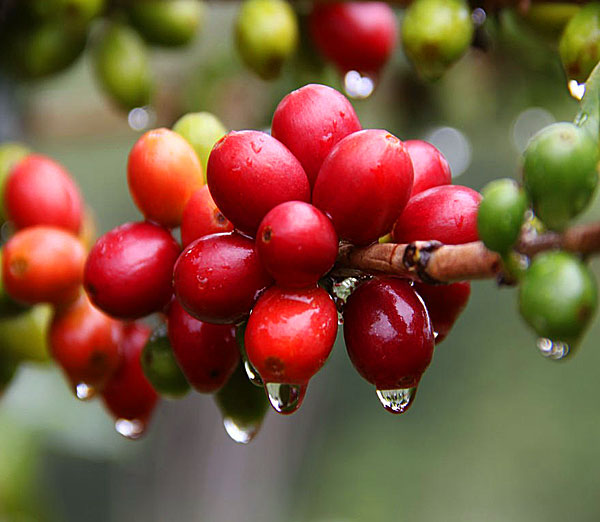
History of Arabica beans Arabica bean varieties derived from Arabica beans
The origin of the historical Arabica species (Coffea arabica) is the Abyssini Arabica sub-plateau (Abyssinia, now known as the Ethiopian plateau) in Ethiopia. In the early days, it was mainly eaten as medicine (Islamic monks used as a secret medicine to cure the body and mind or to awaken the brain), developed the habit of baking and drinking in the 13th century, and passed through the Arab region in the 16th century.
2016-03-22 Rabbi Kadou History Source Variety Card species Coffea